
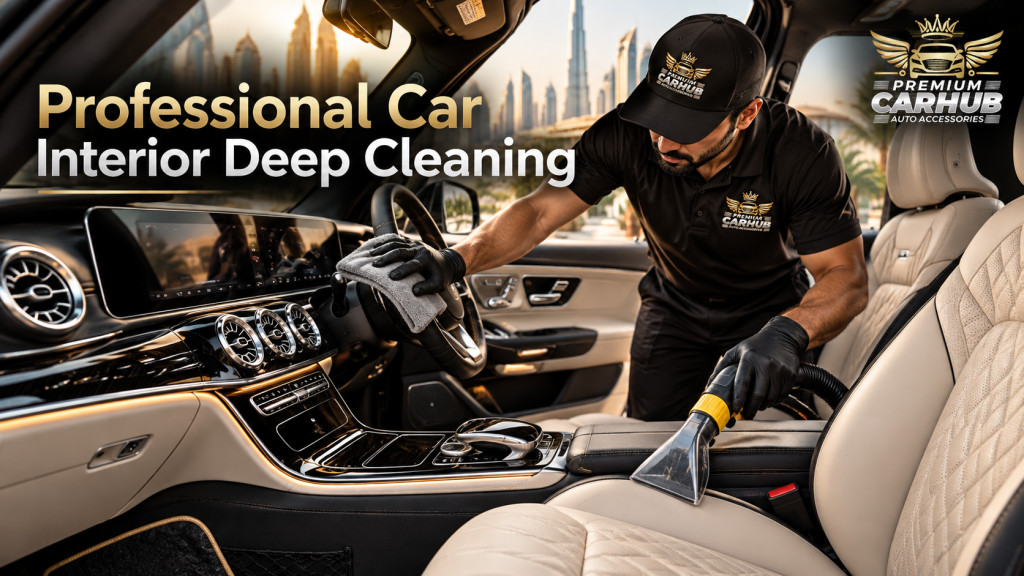
Professional Car Interior Deep Cleaning in Dubai: The Complete Guide to Restoring Cabin Comfort
A clean car interior changes how every journey feels. The seats are more comfortable, the dashboard looks better, unpleasant smells disappear, and passengers notice the difference immediately. However, achieving that level of cleanliness takes considerably more than vacuuming the floor and wiping the steering wheel.
Professional Car Interior Deep Cleaning focuses on removing the dirt, stains, oils, dust and contamination that ordinary car washes leave behind. It reaches beneath seats, inside upholstery fibres, between console panels and around frequently touched surfaces.
For drivers in Dubai, interior maintenance deserves particular attention. Fine desert sand, extreme temperatures, constant air-conditioning use and daily commuting can place considerable pressure on cabin materials.
A vehicle travelling between Deira, Business Bay and Dubai Marina every day faces different cleaning challenges from a sports car used occasionally on weekends. Applying the same cleaning technique to both vehicles is rarely the most effective approach.
At Premium Car Hub, the focus is on professional vehicle detailing, upholstery care and interior restoration suited to different vehicle materials and driving conditions.
This guide explains how professional interior deep cleaning works, which cleaning methods are appropriate for different surfaces, how frequently Dubai drivers should schedule the service and how to recognise genuinely thorough detailing.
What Is Professional Car Interior Deep Cleaning?
Car Interior Deep Cleaning is a comprehensive process designed to remove embedded contamination from the passenger cabin while protecting the vehicle’s original materials.
Unlike routine cleaning, which concentrates on visible dust and debris, deep cleaning addresses contamination trapped within upholstery, carpet fibres, seat seams, storage compartments and other difficult-to-access areas.
Depending on the vehicle’s condition, the service may involve detailed vacuuming, fabric extraction, controlled steam cleaning, leather treatment, stain removal, dashboard cleaning and odour-source investigation.
What Areas Are Included?
A properly planned interior detailing service can address:
- Front and rear seats, including stitching and seams
- Carpets, removable mats and footwells
- Dashboard surfaces and instrument surrounds
- Door panels, handles and armrests
- Steering wheel and centre console
- Cup holders, storage compartments and seat rails
- Air vents and accessible ventilation grilles
- Boot flooring and luggage compartments
- Interior glass and mirrors
- High-contact controls and trim
The specific treatment depends on the material. For example, fabric upholstery may tolerate carefully controlled extraction, while delicate Alcantara surfaces require a much gentler approach.
The objective is not simply to make the interior look wet or shiny. A professional result should feel clean, dry and comfortable without leaving detergent residue or overpowering fragrance.
Why Car Interior Deep Cleaning Matters in Dubai
The UAE presents several interior maintenance challenges that drivers in milder climates may encounter less frequently.
1. Fine Desert Dust and Sand Accumulation
Sand enters vehicles through shoes, luggage, open doors and windows. Smaller particles settle into carpet fibres, ventilation grilles and narrow gaps around seats.
A quick vacuum may remove visible sand, but compacted grit often remains.
Over time, particles trapped beneath shoes and floor mats can create abrasive wear. Professional Car Interior Deep Cleaning begins by removing these particles before introducing moisture or brushing upholstery.
2. Extreme Temperatures and Interior Material Wear
Cars parked outdoors in Dubai can experience considerable cabin heat.
Prolonged heat exposure can contribute to deterioration of adhesives, leather coatings and certain plastics. Contaminants such as sunscreen, perspiration and skin oils can also become harder to remove when neglected.
Using excessive steam or aggressive chemicals on these surfaces may cause additional damage.
Controlled cleaning and suitable surface protection are therefore especially important.
3. Heavy Air-Conditioning Usage
Air-conditioning is essential for comfortable driving throughout much of the UAE.
However, visible vent cleaning cannot solve every air-quality or odour issue.
A dirty cabin filter, moisture in the HVAC system or contamination around the evaporator may contribute to unpleasant smells.
Professional detailers should distinguish between contamination within the passenger cabin and problems that require air-conditioning maintenance.
4. Family Travel and Daily Commuting
Family SUVs frequently experience spilled beverages, food crumbs, shoe marks and fingerprints.
Children’s car seats can conceal crumbs and stains, while frequent passengers increase contact with door handles, armrests and seat surfaces.
Regular Car Interior Deep Cleaning helps keep heavily used cabins presentable and easier to maintain.
The Professional Car Interior Deep Cleaning Process
A reliable detailing process follows a logical sequence. Starting with the wrong treatment can make stains more difficult to remove or expose delicate materials to unnecessary damage.
Step 1: Complete Interior Inspection
Before cleaning begins, a technician should identify the vehicle’s upholstery materials, existing stains and visible damage.
This includes checking for discoloured leather, loose stitching, damaged trim, watermarks and sensitive electronic components.
Photographing existing damage provides an accurate reference.
An important distinction is that cleaning cannot repair everything. Permanent dye transfer, damaged leather coatings and cigarette burns may require restoration rather than conventional cleaning.
Step 2: Dry Vacuuming Before Wet Treatment
Detailed vacuuming is one of the most important stages.
Technicians use appropriate attachments and brushes to remove loose sand, crumbs, hair and particles from carpets and upholstery.
Particular attention should be given to seat rails, cushion edges and carpet corners.
A useful professional rule: remove dry contamination while it is still dry.
Introducing moisture before removing sand can turn loose dust into muddy residue, making the following stages less efficient.
Step 3: Fabric Seat and Carpet Treatment
Fabric upholstery often absorbs spilled liquids and oily contamination.
After material assessment, a suitable automotive upholstery cleaner may be applied to affected areas.
Agitation with the correct brush helps release contaminants. Extraction equipment can then remove loosened dirt and cleaning solution.
Technicians should avoid excessive saturation because water may penetrate the seat foam or carpet underlay.
Step 4: Leather Seat Cleaning
Leather requires a different approach.
Most modern automotive leather has a protective surface finish. Cleaning should preserve this coating rather than strip it away.
A suitable leather cleaner, soft brush or microfiber cloth is generally preferable to harsh household detergents.
Conditioning or protective products should be chosen according to the leather manufacturer’s recommendations.
Ventilated seats, perforated leather and delicate stitching require additional care to prevent liquids entering hidden components.
Step 5: Dashboard and Electronic Surface Cleaning
Modern vehicle interiors contain infotainment screens, touch controls, digital displays and electronic switches.
Liquids should generally be applied to suitable cleaning cloths rather than sprayed directly into electrical components.
High-gloss trim needs soft microfiber materials to minimise scratching, while screens should be cleaned according to manufacturer instructions.
Dashboard finishes should remain natural-looking and low-glare rather than excessively shiny.
Step 6: Stain and Odour Treatment
Professional Car Interior Deep Cleaning should address the cause of a stain or smell.
Coffee, milk, perfume, tobacco smoke and pet contamination behave differently.
A sugary drink may require residue extraction. A damp smell may require moisture investigation. Cigarette smoke may have penetrated materials beyond the seats.
Masking the smell with perfume does not resolve the underlying problem.
Step 7: Drying and Final Inspection
Drying is not an optional finishing touch.
Moisture trapped beneath carpets or inside upholstery can contribute to musty odours and other problems.
The Centers for Disease Control and Prevention recommends promptly drying wet materials to reduce mould-related risks. Although its general moisture guidance is not written specifically for automotive detailing, the principle supports careful moisture management.
CDC
Before handing over the vehicle, a detailer should confirm that treated surfaces are appropriately dry, visible residues have been removed and all accessible areas have received their intended treatment.
Car Interior Deep Cleaning vs Regular Cleaning vs Steam Cleaning
The best method depends on what needs to be removed.
| Feature | Regular Interior Cleaning | Steam Cleaning | Professional Deep Cleaning |
|---|---|---|---|
| Primary purpose | Surface maintenance | Loosen dirt with controlled heat | Comprehensive cabin cleaning |
| Vacuuming | Basic | Usually included | Detailed |
| Fabric stains | Limited | Suitable for some stains | Targeted cleaning and extraction |
| Leather care | Basic wiping | Restricted by material | Material-specific treatment |
| Seat gaps | Limited | Good access where safe | Detailed treatment |
| Carpet extraction | Usually not included | May need a separate stage | Included when required |
| Drying requirements | Minimal | Depends on application | Managed according to treatment |
| Best suited for | Routine upkeep | Compatible detailed surfaces | Heavily used or contaminated cabins |
Steam cleaning is a useful technique, but it is not always the answer.
A stubborn drink spill inside seat foam may require extraction, while delicate leather or electronics may be unsuitable for direct steam exposure.
For a more detailed explanation, read Premium Car Hub’s guide to steam interior deep cleaning.
Choosing the Correct Cleaning Method for Different Interior Materials
Material compatibility is often what separates professional detailing from careless cleaning.
Nappa and Finished Leather
Use leather-compatible products, limited moisture and gentle cleaning tools. Avoid stiff brushing, aggressive solvents and unnecessary soaking.
Alcantara and Suede-Like Materials
These surfaces require approved products and careful low-moisture treatment. Incorrect scrubbing may disturb the texture or leave visible marks.
Fabric Upholstery
Fabric can benefit from controlled shampooing or extraction, provided the underlying foam is not excessively wetted.
Piano Black and Glossy Trim
These finishes reveal scratches easily. Dirt particles should be lifted with appropriate soft cloths rather than rubbed across the surface.
Headliners and Roof Upholstery
Many roof linings rely on adhesives and backing materials that can be damaged by excessive moisture or heat.
Gentle spot cleaning is usually safer than aggressive wet treatment.
Vehicles with customised cabins may require additional precautions. Premium Car Hub also discusses materials and interior restoration in its premium car upholstery guide.
A Practical Interior Contamination Diagnosis: Treat the Cause, Not the Appearance
One useful way to improve Car Interior Deep Cleaning is to diagnose contamination before choosing a product.
Consider three common situations.
Scenario A: The dashboard smells unpleasant after parking in the sun.
The smell may come from residues on heated surfaces, but it could also involve other cabin materials. Cleaning should begin with inspection rather than strong fragrance.
Scenario B: The carpet looks clean but smells damp.
The problem may be below the visible carpet, particularly after a liquid spill or water ingress. Surface shampooing alone may be insufficient.
Scenario C: The front seats have shiny, darkened side bolsters.
What appears to be leather ageing may partly involve transferred skin oils and surface contamination. Gentle cleaning may improve appearance, but worn coatings cannot simply be cleaned back to their original state.
This distinction prevents unnecessary chemical treatment and helps owners understand what professional detailing can realistically achieve.
Pros and Cons of Professional Car Interior Deep Cleaning
Advantages
- Removes dirt that routine vacuuming may miss
- Improves interior appearance and comfort
- Helps reduce persistent odours when their sources are accessible
- Supports maintenance of leather, fabric and trim
- Makes heavily used family vehicles easier to keep clean
- Improves vehicle presentation before sale or trade-in
- Allows early identification of stains, moisture and material wear
Limitations
- Requires more time than ordinary interior cleaning
- Costs more than a basic car wash
- Incorrect methods can damage delicate materials
- Certain stains and odours may not be completely removable
- Wet extraction requires appropriate drying
- Faded, torn or cracked materials may need repair or replacement
The benefits are greatest when the service is selected according to vehicle condition rather than automatically applying every possible treatment.
How Often Should You Schedule Car Interior Deep Cleaning in Dubai?
There is no single ideal interval for every vehicle.
The following is a practical starting point, not a fixed manufacturer requirement.
| Vehicle Usage | Suggested Deep Cleaning Interval |
|---|---|
| Regular daily commuter | Every 4–6 months |
| Family SUV with children | Every 3–4 months |
| Chauffeur or high-passenger vehicle | Every 2–3 months, depending on use |
| Occasionally driven luxury vehicle | Every 6–12 months |
| Vehicle with significant spills or odours | As soon as practical after assessment |
Frequent cleaning does not mean repeatedly soaking every surface.
Between appointments, simple vacuuming, prompt spill removal and regular dusting are often sufficient.
Premium Car Hub’s guide on how often to deep clean a car explains how driving habits influence the maintenance schedule.
Expert Recommendations From Premium Car Hub Technicians
Premium Car Hub’s published detailing guidance emphasises careful material assessment, controlled cleaning and interior maintenance suited to Dubai’s conditions.
No 1 Car Customization in Dubai
+1
Based on those principles, the following recommendations are particularly useful.
Remove Sand Before Using Liquid Cleaners
Always vacuum dry sand before applying upholstery products. This reduces the chance of spreading abrasive particles across delicate surfaces.
Avoid One Product for Every Surface
Leather, fabric, textured plastics and screens require different cleaning methods.
An all-purpose chemical that works on a rubber mat may be unsuitable for premium seat upholstery.
Investigate Odours by Location
Check whether the smell originates from the seats, carpets, boot or ventilation system.
An odour present mainly when the AC starts may need HVAC inspection rather than more seat shampooing.
Keep Leather and Dashboard Finishes Natural
Heavy, glossy dressings can attract dust and create unwanted reflections.
Material-compatible, low-sheen finishes are generally more appropriate for a sophisticated factory appearance.
Check Complete Drying Before Collection
Ask whether the carpet and treated upholstery are dry. The service should not rely on simply masking damp smells with an air freshener.
Inspect Your Cabin Air Filter
A fresh-looking dashboard does not mean the air-conditioning system is clean.
Check the cabin filter according to the manufacturer’s servicing guidance, particularly after frequent driving in dusty conditions.
Common Mistakes Dubai Car Owners Should Avoid
Even expensive vehicles can develop interior problems because of incorrect cleaning habits.
One common mistake is using household bleach or aggressive disinfectants on upholstery. These chemicals can damage materials and may produce harmful fumes when mixed.
Another is spraying products directly onto touchscreen displays, switches and seat controls.
Some owners also attempt to remove stains by rubbing aggressively, unintentionally spreading contamination or affecting fabric texture.
Excessive water is another concern. Wet carpets may appear clean immediately but develop odours if moisture remains underneath.
The U.S. Environmental Protection Agency advises following cleaning-product labels, checking surface compatibility and providing appropriate ventilation.
US EPA
+1
A simple rule is to test a compatible product on an inconspicuous surface before broader application.
How Professional Interior Cleaning Can Support Vehicle Resale Presentation
Buyers often inspect the cabin closely because interior condition reflects how a vehicle has been used and maintained.
Dirty seat seams, stained carpets, sticky buttons and unpleasant smells can create a poor impression even when the exterior paint looks excellent.
Professional Car Interior Deep Cleaning can improve presentation by removing removable contamination and revealing the actual condition of the materials.
However, detailing should not be confused with mechanical restoration.
A clean interior does not replace service records, a vehicle inspection or necessary upholstery repairs.
For owners preparing a premium vehicle for resale, combining interior care with appropriate exterior maintenance may produce a more complete presentation.
Premium Car Hub explores this wider approach in its luxury car detailing guide.
How to Choose a Professional Car Interior Deep Cleaning Service in Dubai
Price should not be the only deciding factor.
Before booking, ask the service provider whether the package includes detailed vacuuming, fabric stain treatment, leather cleaning, console detailing, odour investigation and proper drying.
It is also worth asking which treatments are excluded.
For example, a standard interior cleaning package might not include extensive liquid-spill remediation, cabin filter replacement or upholstery repairs.
A reliable detailer should explain material limitations and avoid promising that every stain or smell will disappear completely.
Most importantly, choose a provider that can distinguish between cleaning, sanitising, restoration and mechanical maintenance.
These are different services, and understanding those differences helps protect your vehicle and your budget.
Frequently Asked Questions About Car Interior Deep Cleaning
1. What does professional Car Interior Deep Cleaning include?
Professional Car Interior Deep Cleaning generally includes detailed vacuuming, seat and carpet cleaning, dashboard and console care, removal of accessible dirt and debris, appropriate stain treatment and a final interior inspection.
Depending on the package, steam treatment, extraction, leather conditioning and odour treatment may also be included.
Always confirm the service scope before booking.
2. How much does Car Interior Deep Cleaning cost in Dubai?
The price depends on vehicle size, upholstery material, contamination level and the work required.
A compact sedan with light interior soiling usually requires less work than a seven-seat SUV with heavily stained carpets.
Premium leather, delicate materials and specialised odour treatment can also influence the quotation.
Contact Premium Car Hub for a vehicle-specific assessment rather than relying on an advertised starting price.
3. Can professional deep cleaning remove cigarette smells?
It can reduce cigarette odours by removing accessible residue from upholstery, carpets and interior surfaces.
However, smoke contamination may extend into the headliner, insulation and ventilation system.
Severe or longstanding odours may require additional treatments, and complete removal cannot always be guaranteed.
4. Is steam cleaning safe for leather car seats?
Controlled steam may be compatible with some surfaces under appropriate conditions, but direct heat should not automatically be used on every leather interior.
Perforated leather, delicate coatings and damaged stitching require extra caution.
A leather-compatible cleaning method is often preferable, depending on the manufacturer’s care instructions.
5. How long does professional Car Interior Deep Cleaning take?
The duration depends on the size of the vehicle, the amount of contamination and the selected treatments.
A lightly soiled car may require only a few hours, while heavily stained upholstery or extensive extraction can take considerably longer.
Drying time is also important and should not be shortened at the expense of leaving moisture trapped inside the cabin.
6. Can deep cleaning remove old coffee and food stains?
Many stains can be significantly reduced, particularly when the correct cleaning method is used.
However, removal depends on the substance, fabric type, age of the stain and previous cleaning attempts.
Some stains permanently alter dyes or coatings, meaning complete removal may not be possible without restoration.
7. Does Car Interior Deep Cleaning eliminate bacteria and allergens?
Cleaning can remove dust, residues and some biological contaminants from accessible surfaces.
However, cleaning is not the same as validated sanitising or disinfecting.
The EPA distinguishes these processes based on their purposes and the products used. A provider should not claim comprehensive disinfection without an appropriate method and supporting evidence.
US EPA
8. Is deep cleaning recommended for luxury cars with Alcantara interiors?
Yes, provided the service uses cleaning products and techniques compatible with Alcantara and the vehicle manufacturer’s instructions.
These materials should not receive aggressive scrubbing or excessive moisture.
A professional detailer should inspect the interior and explain how sensitive surfaces will be handled.
9. Will my vehicle need to remain unused after deep cleaning?
Not necessarily.
For low-moisture cleaning, the vehicle may be ready after inspection and suitable drying.
However, heavily extracted fabric seats and carpets may require additional drying before normal use.
Avoid placing covers over damp seats or leaving wet upholstery sealed inside a parked vehicle.
10. Can professional interior deep cleaning improve my car’s resale value?
A cleaner cabin can improve buyer impressions and help the vehicle present well during inspection.
However, there is no guarantee of a specific increase in resale price.
Overall condition, mileage, maintenance history, accident history and market demand remain important factors in determining vehicle value.
Authoritative Resources for Safe Vehicle Interior Care
For readers who want to understand the technical principles behind cleaning methods, the following independent resources provide useful information.
1. EPA – Biological Contaminants and Indoor Air Quality — Guidance on cleaning products, ventilation, chemical compatibility and biological contaminants.
2. EPA – Cleaning, Sanitising and Disinfecting — Explains why removing dirt is different from chemically sanitising or disinfecting surfaces.
3. CDC – Controlling Asthma and Environmental Triggers — Information about dampness, mould and environmental conditions that can affect respiratory health.
4. CDC – Eight Tips to Clean Mould — Practical principles for moisture control, safe cleaning and drying.
These resources provide general public-health and cleaning guidance rather than vehicle-specific manufacturer instructions. Always follow the appropriate automotive material care recommendations.
Conclusion: A Cleaner Interior Starts With the Right Cleaning Method
Professional Car Interior Deep Cleaning is an important part of responsible vehicle maintenance, particularly in Dubai, where dust, heat, daily commuting and air-conditioning place additional demands on cabin materials.
The best results do not come from applying the strongest chemical, using the hottest steam or soaking every seat.
They come from identifying contamination accurately, choosing surface-compatible methods, extracting dirt carefully and allowing treated materials to dry properly.
Whether you drive a family SUV, an executive sedan or a luxury sports car, a well-maintained interior contributes to comfort, presentation and the long-term condition of your vehicle.
At Premium Car Hub, professional interior detailing and upholstery expertise support a more considered approach to cabin care. The objective is to preserve the vehicle’s materials while addressing the dirt and residues that ordinary cleaning leaves behind.
For Dubai drivers seeking a cleaner and fresher cabin, arranging a professional inspection is a sensible first step.
Contact Premium Car Hub – Professional Car Interior Deep Cleaning in Dubai
Looking for expert Car Interior Deep Cleaning in Dubai? Contact Premium Car Hub to discuss your vehicle’s interior condition, cleaning requirements and suitable detailing options.
Premium Car Hub – Dubai
Location: 20th St – Al Khabaisi – Dubai, United Arab Emirates
Phone: +971 4 570 0353
Email: info@premiumcarhub.com
Website: https://premiumcarhub.com/
Restore cabin comfort with professional interior detailing designed for Dubai driving conditions.