
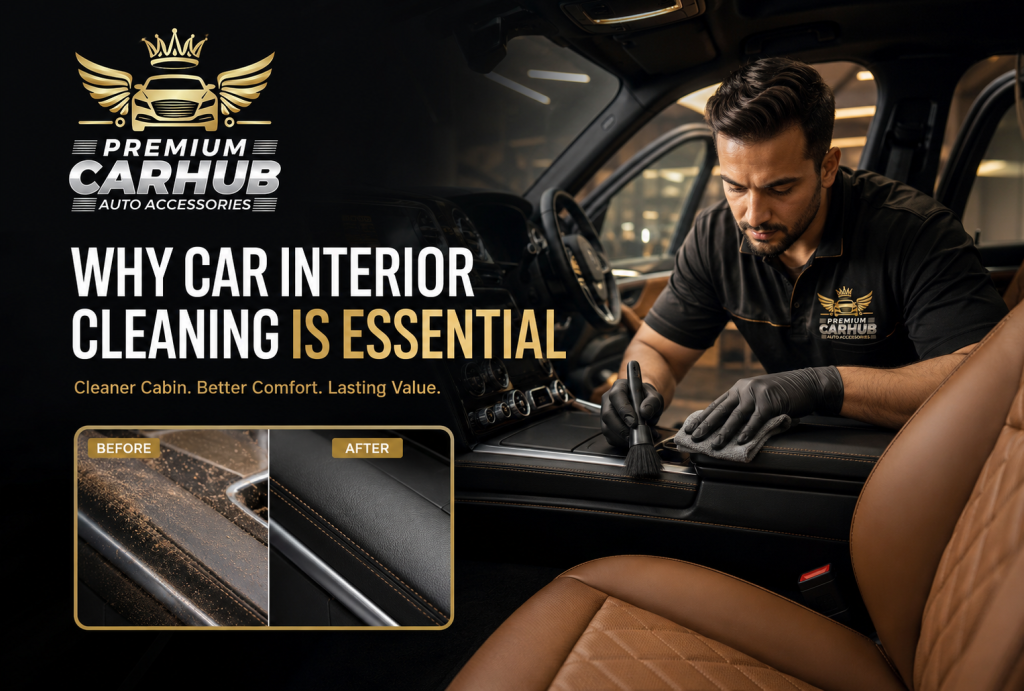
Why Car Interior Cleaning Is Essential
A car may look impressive from the outside while hiding dust, food particles, stains and unpleasant smells inside. Drivers notice exterior dirt immediately, but contamination within seat seams, carpets, air vents and storage compartments often develops gradually. By the time the cabin begins to smell stale or the upholstery appears discoloured, routine wiping is no longer enough.
Car Interior Cleaning is essential because the cabin is the part of the vehicle that drivers and passengers directly touch, breathe in and use every day. Cleaning it properly supports comfort, protects expensive interior materials and makes the vehicle easier to maintain.
This is particularly important in the UAE. Fine desert dust enters through open doors, footwear and ventilation systems. High temperatures can dry leather, intensify trapped odours and make spilled liquids more difficult to remove. Regular commuting, family travel, takeaway drinks and long periods of air-conditioning create additional cleaning challenges.
The correct approach is not to cover smells with perfume or apply one strong chemical to every surface. Effective Car Interior Cleaning treats leather, fabric, plastic, screens, carpets and delicate trim according to their individual requirements.
Contact Premium Car Hub for Car Interior Cleaning Service
What Does Car Interior Cleaning Include?
A basic clean usually involves removing rubbish, vacuuming visible surfaces and wiping the dashboard. A professional service goes considerably further.
Comprehensive Car Interior Cleaning may include:
- Vacuuming seats, carpets and floor mats
- Cleaning between seat cushions and rails
- Removing sand from corners and stitching
- Treating fabric and carpet stains
- Cleaning and conditioning leather
- Wiping dashboards, consoles and door panels
- Cleaning cup holders and storage compartments
- Treating steering wheels and frequently touched controls
- Cleaning interior glass and mirrors
- Removing odour sources
- Cleaning accessible air vents
- Drying inspected surfaces correctly
- Applying suitable protectants where required
The exact process should depend on the vehicle’s materials and condition. A family SUV with fabric seating does not need the same treatment as a luxury saloon with Nappa leather, Alcantara, piano-black trim and multiple display screens.
Contact Premium Car Hub for Car Interior Cleaning Service
Why UAE Vehicles Need More Frequent Interior Care
Desert Dust Travels Beyond Visible Surfaces
Dubai drivers regularly encounter fine dust, construction debris and windblown sand. These particles enter a vehicle whenever a door or window opens. Shoes carry additional sand onto mats and carpets.
Large particles are easy to see, but fine dust can settle inside:
- Seat perforations
- Dashboard seams
- Air vents
- Door pockets
- Carpet fibres
- Speaker grilles
- Seatbelt anchor points
- Gaps around the centre console
Improper removal can also create damage. Rubbing a dusty glossy panel with a dry cloth may drag abrasive particles across its surface and produce fine scratches. Professional Car Interior Cleaning normally begins with controlled vacuuming or gentle dust removal before wet products are introduced.
Contact Premium Car Hub for Car Interior Cleaning Service
Extreme Heat Accelerates Interior Ageing
A closed vehicle parked outdoors in Dubai can become extremely hot. Repeated heat exposure can contribute to dry leather, faded trim, brittle plastics and weakened adhesives.
Dust and body oils left on leather can become more difficult to remove after repeated heat cycles. Spilled coffee or milk can also develop a stronger smell when repeatedly heated inside a parked vehicle.
Although cleaning cannot prevent every form of UV or heat-related wear, proper Car Interior Cleaning removes contamination that may accelerate deterioration. Compatible conditioners and protectants can then be applied where the material manufacturer permits them.
Air-Conditioning Changes Cabin Conditions
UAE drivers rely heavily on air-conditioning. A clean dashboard alone does not guarantee clean cabin air because dust can accumulate around vents, footwells and the cabin filter.
Research into vehicle indoor air quality shows that contaminants can enter cabins from external air and can also originate from materials and occupant activities. Vehicle speed, ventilation settings and filtration can influence pollutant entry and concentration. Vehicle indoor air-quality research supports treating the cabin as an enclosed environment rather than merely a collection of decorative surfaces.
Interior detailing should not be presented as a medical treatment or a substitute for cabin-filter and AC maintenance. It is one component of wider cabin hygiene.
Contact Premium Car Hub for Car Interior Cleaning Service
Seven Reasons Car Interior Cleaning Is Essential
1. It Creates a More Comfortable Driving Environment
A clean cabin feels calmer and easier to use. Drivers are less likely to be distracted by loose bottles, cluttered consoles or dirty glass. Passengers also notice clean seats and a neutral smell immediately.
Effective Car Interior Cleaning improves comfort by dealing with the source of dirt rather than disguising it. A heavily perfumed cabin may smell strong, but that does not mean the upholstery or carpet is clean.
2. It Helps Manage Dust and Allergens
Carpets, fabric seats and floor mats can trap dust, pollen, pet hair and other particles. Normal driving movement can disturb some of this material.
The World Health Organization explains that particulate air pollution can affect respiratory and cardiovascular health. This does not mean ordinary cabin dust automatically creates a specific illness, but it demonstrates why fine-particle exposure should not be dismissed as only a cosmetic concern. See the WHO’s information on ambient air pollution.
Thorough vacuuming, surface cleaning and timely cabin-filter replacement can support a cleaner cabin environment. Anyone with severe allergies or respiratory symptoms should seek appropriate medical advice rather than relying only on vehicle cleaning.
3. It Protects Leather and Upholstery
Leather collects body oils, perspiration, dust and product residue. Over time, this mixture can create glossy patches, colour transfer and premature wear.
Fabric seats face different problems. Liquids can penetrate beneath the visible surface, while sand and crumbs settle around seams. Aggressive scrubbing may spread a stain or damage the fabric texture.
Professional Car Interior Cleaning matches the treatment to the material. Leather should usually receive a suitable automotive cleaner and controlled agitation. Fabric may require extraction, but it must not be left excessively wet.
4. It Prevents Stains from Becoming Permanent
Speed matters after a spill. The longer coffee, juice, makeup or food residue remains, the more difficult it may become to remove.
A useful response is to:
- Blot the spill without aggressive rubbing.
- Remove solid residue carefully.
- Avoid flooding electrical controls or perforated seats.
- Use a product suitable for the specific surface.
- Arrange professional treatment if the liquid has penetrated deeply.
Do not combine random household chemicals. Some mixtures can create hazardous fumes, while strong alkaline or solvent-based products may discolour automotive materials.
5. It Addresses Odours at Their Source
Common sources of cabin odour include:
- Spilled drinks
- Food trapped beneath seats
- Damp carpets
- Cigarette smoke
- Pet hair
- Contaminated floor mats
- AC-system problems
- Water leaks
- Mould or bacterial growth in wet areas
A fragrance changes what the driver smells; it does not remove the source. Proper Car Interior Cleaning requires inspection. If an odour returns shortly after cleaning, the vehicle may have trapped moisture, a leaking seal, contaminated insulation or an AC-related problem.
The US Environmental Protection Agency notes that moisture control is central to controlling mould. While its guidance is written for buildings, the underlying principle is relevant: damp material must be dried and the water source corrected. EPA moisture and mould guidance explains this relationship.
6. It Supports Better Resale Presentation
Buyers evaluate a used vehicle with their senses. They notice smells, worn bolsters, stained carpets, sticky switches and dirty headliners before reviewing every mechanical detail.
A consistently maintained cabin can suggest responsible ownership. It does not replace service records or mechanical inspection, but it strengthens overall presentation.
One neglected spill can also create an expensive resale objection. A buyer may assume that a stained seat or persistent odour will require upholstery replacement. Regular Car Interior Cleaning reduces the chance of minor contamination becoming a major negotiation point.
7. It Protects the Owner’s Investment
Modern cabins contain expensive components, including:
- Infotainment displays
- Digital instrument panels
- Touch-sensitive controls
- Ambient lighting
- Ventilated and heated seats
- Electronic switches
- Premium leather
- Wood, aluminium and gloss trim
Using excessive water or harsh chemicals around these parts can cause damage. Professional detailing is valuable not simply because it cleans more deeply, but because trained technicians understand where moisture should not be introduced.
Contact Premium Car Hub for Car Interior Cleaning Service
Routine Cleaning vs Professional Deep Cleaning
| Area | Routine owner cleaning | Professional deep cleaning |
|---|---|---|
| Loose dust | Light vacuuming and microfibre wiping | Detailed vacuuming of seams, rails and narrow gaps |
| Floor mats | Shaking, vacuuming or light washing | Material-specific washing, extraction and controlled drying |
| Fabric seats | Spot treatment of fresh marks | Deeper stain treatment and extraction where suitable |
| Leather | Gentle wiping | Cleaning, inspection and compatible conditioning |
| Air vents | Wiping visible vent blades | Detailed accessible-vent cleaning and condition assessment |
| Odours | Removing rubbish and ventilating | Locating and treating likely odour sources |
| Carpets | Surface vacuuming | Agitation, stain treatment and extraction |
| Screens | Screen-safe microfibre cloth | Detailed cleaning with electronics-safe methods |
| Recommended frequency | Weekly or as needed | Based on usage, condition and UAE exposure |
Routine care and professional detailing are not competitors. Weekly maintenance slows accumulation, while scheduled deep cleaning addresses areas that normal cleaning cannot reach effectively.
A Material-Specific Cleaning Strategy
Leather Seats
Leather should not automatically appear shiny. An unnaturally glossy surface can indicate accumulated oils or unsuitable dressing.
During Car Interior Cleaning, technicians should first identify whether the material is coated leather, semi-aniline leather, synthetic leather or another finish. Cleaning products should be applied conservatively and tested on an inconspicuous area.
Avoid heavy silicone dressings that leave seats slippery. They may create an artificial finish and attract additional dust.
Contact Premium Car Hub for Car Interior Cleaning Service
Fabric and Carpets
Fabric benefits from methodical vacuuming before liquid treatment. Introducing cleaner before removing sand can create muddy residue deeper in the fibres.
Extraction can be useful for heavily contaminated fabric, but overwetting creates new problems. Moisture may remain beneath the surface even when the top feels dry. Proper ventilation and drying are therefore part of the service, not optional finishing steps.
Alcantara and Suede-Like Materials
Alcantara requires gentle handling. Aggressive brushing can alter its texture, while inappropriate chemicals may create visible patches.
A trained technician should work in small sections, limit moisture and restore the fibre direction carefully. Owners should not assume that a product labelled “upholstery cleaner” is safe for every textile.
Screens and Glossy Trim
Touchscreens, digital dashboards and piano-black panels scratch easily. They should be cleaned with a soft, clean microfibre cloth and a suitable product applied sparingly.
Spraying liquid directly onto screens or switches is unnecessary and potentially risky. Apply the cleaner to the cloth when appropriate and avoid allowing moisture to enter edges or control gaps.
Headliners
The headliner is one of the most commonly mishandled areas. Excessive moisture or aggressive agitation can weaken the adhesive supporting the fabric.
Spot cleaning is usually safer than saturation. Sagging headliners often require repair, not additional cleaning.
Contact Premium Car Hub for Car Interior Cleaning Service
Pros and Cons of Professional Car Interior Cleaning
Advantages
- Reaches areas missed during routine vacuuming
- Uses products suited to specific cabin materials
- Helps remove embedded dust and stains
- Addresses odour sources more effectively
- Supports leather, carpet and upholstery preservation
- Improves presentation before resale
- Saves the owner time
- Reduces the risk of damaging sensitive components through incorrect DIY methods
Possible Disadvantages
- Costs more than basic home cleaning
- The vehicle may require drying time
- Severe stains or damage may not be completely reversible
- Poorly trained providers can overwet fabrics or misuse chemicals
- Some deodorising treatments may only mask odours
- Incorrectly applied glossy dressings can attract dust or make controls slippery
The quality of the provider matters. Ask what products and processes will be used, whether the cleaner understands your vehicle’s materials and how the cabin will be dried.
A Practical UAE Cleaning Schedule
There is no universal schedule because vehicle use varies. The following framework is more realistic than a fixed rule.
Weekly
- Remove rubbish and food
- Shake and vacuum floor mats
- Wipe high-touch areas safely
- Clean interior glass
- Check for fresh stains
- Remove visible sand before it spreads
Monthly
- Vacuum seats, seams, carpets and the luggage area thoroughly
- Clean cup holders and storage areas
- Inspect leather for dry or discoloured sections
- Check beneath removable mats for dampness
- Examine seat rails and footwells for compacted sand
Every Three to Six Months
Consider professional Car Interior Cleaning when the vehicle is used daily, carries children or pets, is parked outdoors, or regularly travels near desert and construction areas.
Low-use vehicles parked in protected environments may need it less frequently. Ride-hailing vehicles, family SUVs and cars used for frequent client transport may need attention more often.
Contact Premium Car Hub for Car Interior Cleaning Service
Immediately After Specific Events
Arrange prompt treatment after:
- Milk or food spills
- Water entering the cabin
- Vomit or other biological contamination
- Heavy smoke exposure
- Transporting shedding pets
- Floodwater exposure
- A persistent musty smell
Floodwater contamination requires specialist inspection and may involve electrical, safety and insurance concerns beyond normal detailing.
Contact Premium Car Hub for Car Interior Cleaning Service
Premium Car Hub’s Related Interior Care Guides
Drivers planning a complete cabin-care programme can explore these Premium Car Hub resources:
- Best Car Interior Cleaning Tips for Luxury Cars in Dubai
- Professional Car Interior Deep Cleaning in Dubai
- Premium Car Accessories That Improve Comfort and Practicality
- Custom Leather Car Interior in Dubai
These guides help owners coordinate cleaning with upholstery care, accessories and longer-term interior upgrades.
Trusted Resources for Cabin Health and Vehicle Care
For readers who want evidence-based information beyond detailing advice:
- The World Health Organization explains the health implications of particulate air pollution.
- The US Environmental Protection Agency explains why controlling moisture is essential when addressing mould.
- Vehicle interior air-quality research examines how external pollutants can enter vehicle cabins.
- AVL’s vehicle interior air-quality overview discusses pollutant sources and cabin air testing.
Owners should also follow the vehicle manufacturer’s manual for approved materials, cabin-filter intervals and warnings related to leather, displays and electronic controls.
Expert Recommendations from Premium Car Hub Technicians
Premium Car Hub technicians recommend treating interior detailing as preventive care rather than waiting until the cabin develops severe stains or odours.
Inspect Before Applying Products
Determine whether the surface is genuine leather, synthetic leather, fabric, Alcantara, coated plastic or an electronic display. Similar-looking materials may react differently.
Remove Dry Contamination First
Vacuum sand and dust before introducing liquid cleaner. This reduces abrasive movement and prevents loose particles from turning into residue.
Use pH-Appropriate Automotive Products
Household cleaners may be too aggressive for coated leather and automotive trim. More chemical strength does not automatically produce a cleaner or safer result.
Control Moisture Carefully
Seats and carpets should never be saturated unnecessarily. Technicians should use controlled application and provide sufficient drying, especially when humidity or limited ventilation slows evaporation.
Investigate Returning Odours
When an odour returns, do not continue adding fragrance. Inspect the carpet underlay, boot area, AC system, drainage points and door seals for an unresolved source.
Combine Cleaning with Prevention
After professional Car Interior Cleaning, use fitted mats, remove food waste promptly, park in shade where possible and treat spills immediately. Prevention extends the result and reduces the need for aggressive future restoration.
Frequently Asked Questions
1. How often should Car Interior Cleaning be done in Dubai?
A daily-use car should receive basic attention every week and a thorough vacuum approximately once a month. Professional deep cleaning may be useful every three to six months, depending on exposure to dust, children, pets, food and outdoor parking.
2. Can interior cleaning remove every stain?
No responsible detailer should guarantee complete removal before inspection. Results depend on the substance, material, age of the stain and previous chemicals used. Early treatment usually improves the chance of removal.
3. Does steam cleaning damage leather seats?
Steam can be useful when controlled by a trained technician, but excessive heat or moisture may harm certain materials. Steam should not be treated as universally safe for every leather finish, adhesive or electronic component.
4. Can Car Interior Cleaning remove cigarette smell?
It can reduce smoke residue and odour when seats, carpets, headliners and hidden areas are treated properly. Severe smoke contamination may require repeated treatment, cabin-filter replacement or specialist procedures. Fragrance alone will not solve it.
5. Is professional cleaning safe for touchscreen displays?
Yes, when electronics-safe products and low-moisture techniques are used. Cleaners should not be sprayed directly into screen edges, buttons or dashboard openings.
6. How long does a car interior take to dry?
Drying time depends on the cleaning method, fabric thickness, humidity, ventilation and the amount of moisture used. Light cleaning may dry quickly, while extraction-treated carpets and seats can require several hours. Ask the provider before collecting the vehicle.
7. Why does my car smell musty after rain or washing?
A musty smell can indicate moisture in the carpet, blocked drainage, leaking seals, AC-system contamination or incomplete drying. The source should be inspected rather than hidden with air freshener.
8. Does Car Interior Cleaning improve resale value?
It cannot change the vehicle’s age or mechanical condition, but it can improve presentation and reduce objections caused by stains, odours and neglected surfaces. A maintained cabin often gives buyers greater confidence.
9. Can I use household disinfectant inside my car?
Only if the vehicle and product manufacturers confirm compatibility. Some household products may discolour leather, damage coatings or affect touchscreens. Automotive material-specific cleaners are generally the safer choice.
10. What should I remove before an interior detailing appointment?
Remove valuables, personal documents, child seats where practical, loose electronics and items from storage compartments. Inform the technician about known spills, delicate aftermarket components or areas where water has entered.
Conclusion
Car Interior Cleaning is not simply about making a vehicle look presentable. It protects the environment in which drivers and passengers spend their time. It removes abrasive sand, treats spills before they become permanent, preserves leather and fabric, improves resale presentation and helps identify moisture or odour problems early.
Dubai’s heat, dust and intensive use of air-conditioning create challenges that ordinary surface wiping cannot always manage. The most effective strategy combines weekly owner maintenance with periodic professional treatment based on how the vehicle is actually used.
A quality service should begin with inspection, use material-specific products, control moisture and treat contamination at its source. When cleaning is approached as preventive vehicle care, the cabin remains more comfortable, easier to maintain and better protected throughout UAE ownership.
Contact Premium Car Hub
For professional Car Interior Cleaning and luxury automotive detailing in Dubai, contact Premium Car Hub.
Location: 20th St – Al Khabaisi – Dubai, United Arab Emirates
Phone: +971 4 570 0353
Email: info@premiumcarhub.com
Website: https://premiumcarhub.com/